The Da Vinci Load pt2

(Scroll down or click here for Part 1)

…and we’re back.

There’s so much wrong with The Code, that I can’t really fit it all  here (nor do I think the book’s worth the attention).For example, outrageous nonsense like the origins of Christianity in Mithraism or the first-time deification of Jesus at the Council of Nicaea (325 AD). Um, did anyone else pay attention at school history? Mr Mithra’s career involved bull-slaying and planetary allusions, but there isn’t a single document out there that talks about his death and resurrection in three days, or that refers to him as the Son of God. They did, however, give him the title Sol Invictus (unconquered Sun) sometime in the 3rd century, and he had to share it with a couple of other Roman gods (El Gabal and Sol, if I’m not mistaken). I’d really like to see where Mr Brown got his reference from. Or pulled it out of.

As for the Council of Nicaea, any shool kid can answer that: Open a New Testament, and you can count a number of instances where Jesus is referred to as God (just as an example, look at John 20:28 and 31). Now, the last time I checked, the New Testament texts were written way before the Nicaean Council. A couple of hundred years before, to be exact. So when Mr Brown whispers to us in his oh-so-conspiratorial tones that “before 325 AD Jesus was regarded by his followers as a mere man”, I would ask him if he got that from the same printed drivel where he copied the rest of his absurdities too. Ever heard of the “Holy Blood, Holy Grail” (1981)? Of course you have. Just like you heard about “The dolorous passion of our Lord Jesus Christ” when “The Passion of the Christ” hit the box office. There’s a reason why these works were so obscure before pop culture made everyone a scholar…

And the list goes on: Simple facts like the Dead Sea scrolls discovery (1945), which were written in the mid-to-late 2nd century AD (some hundred years after the latest Gospel). Illogical accusations that Jesus’s disciples were misogynists who tried to conceal the marriage of their Teacher to Mary Magdalene as a scandal, when they didn’t seem too concerned to hide the fact that He had been crucified like a despicable criminal. Wasn’t that scandalous? Or that they distorted the truth about Jesus just so they can gain power, when all of them ended up suffering martyrdom for their faith – this, I think, alone, would bin the gist of the Code’s theories.
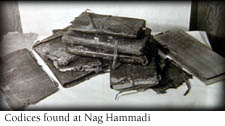
And there is so much more we could talk about: The myth of Jesus being married, the validity of the Apocrypha Gospels the novel relies on, the Hieros Gamos (ancient ceremonial voyeuristic orgies), the Sacred Feminine notion, Opus Dei, how the New Testament was really put together, the alleged “demonisation” of Mary Magdalene (started around 591 AD, and not from the apostle Peter) and much much more to make Da Vinci himself roll in his grave… but there are excellent rescources out there from far more qualified people than me to analyse all this.

It’s not like the writing is any better: Unsubstantial, unrealistic characters spit out ultra-cheesy dialogue – and those are the main characters. The plot is laughable at the least (dusty middle-aged scholar evades professional killers and the French AND British police with the help of a conveniently expert/pretty cryptographer) and the language outlandish. I mean, “[his] laugh now an eerie chortle“? Hello? HELLO? Did an editor go through this pulp before they inflicted it on mankind? Every time some “new revelation” comes through, someone is stumbling backwards, eyes wide and hand on mouth. EVERY. SINGLE. TIME. Look at Sophie Neveu for example. We know that introducing a second “main” character opens the way for dialogue instead of thought, but this girl is simply being abused. The only reason we learn almost anything in the Da Vinci Code is because she yelps “I don’t understand” every three pages. At least she’s pretty. But I dare you to read the ending with a straight face. I DARE you. It’ll make you scream at the thought that Dan Brown actually taughtcreative writing once.

But what really kills the book and the film is their inherent smugness of “I know something you don’t”. Just read any classroom flashback Robert Langdon gets. Usually teaching a class of conveniently conservative imbeciles, he relishes every time he destroys their already tenuous “beliefs” by showing them that people like to use the same symbols across the world. Wow. What a shock. Prof Langdon smiles with glee as he fires his obscure (and not always correct) knowledge of symbology at his baffled students. Look what the pagans used and – oh! look at what the Catholics use! Look at this Star of David – ah! It’s a combined pagan male/female symbol! The Catholics worship a woman (Mary) and her Son? Ah! So did a thousand pagan religions from Greece to Africa to India. And so forth. Yoo stoopid littul piiipul. How wonderful it is that Robert Langdon has fallen from heaven to open our blinded eyes. But then again, what they call Higher Criticism has never been without its Higher Brow. (By the way, can someone tell Mr Brown that NOT ALL CHRISTIANS ARE CATHOLICS? Thank you.)

In the end, I just don’t get it. All these literary agents write to me saying that their client list is full and the publishing world is soooo competitive, and I just have to wonder how does writing so ridiculous, plotting so ludicrous andresearch so absurdly sloppy ever makes it in book form. Virtually every page/scene of The Da Vinci Code causes you to wonder how and why a work of such low thematic and literary quality sold in the millions. But I guess there’s really no such thing as bad publicity, controversy sells and most people just don’t care enough to do their homework. And that, my friends, is the only mystery of The Da Vinci Code that we can’t solve.
And there are also many other things that Jesus did, which if they were written one by one, I suppose that even the world itself could not contain the books that would be written. Amen. – John 21:25

“Beware of false prophets, who come to you in sheep’s clothing, but inwardly they are ravenous wolves. You will know them by their fruits. Do men gather grapes from thornbushes or figs from thistles?” – Mat. 7:15-16

But there are some who trouble you and want to pervert the gospel of Christ. But even if we, or an angel from heaven, preach any other gospel to you than what we have preached to you, let him be accursed. As we have said before, so now I say again, if anyone preaches any other gospel to you than what you have received, let him be accursed. – Gal. 1:7-9

O Timothy! Guard what was committed to your trust, avoiding the profane and idle babblings and contradictions of what is falsely called Knowledge [ = Gnosis] — by professing it some have strayed concerning the faith. – 1 Tim. 6:19-21

For I testify to everyone who hears the words of the prophecy of this book: If anyone adds to these things, God will add to him the plagues that are written in this book; and if anyone takes away from the words of the book of this prophecy, God shall take away his part from the Book of Life, from the holy city, and from the things which are written in this book. Rev. 22:18-19

The Da Vinci Load pt1

(Come on. You knew this was on its way.)

THE RANT

Last night I finally ventured to my local multiplex to watch a little film called “The Da Vinci Code”. After two-and-a-half hours, a bad headache (fault of the seating, not the film) and £4.20 poorer, I thought it was about time to gather some thoughts about it, and the book behind it.

At some point in the film, Robert Langdon (Tom Hanks) accuses Graal “expert” Sir Leigh Teabing (Sir Ian McKellen) of “twisting facts to fit your theory”. In the glorious abundance of controversy that Dan Brown’s titular novel has generated, I personally can’t find more fitting words to describe the whole thing.

But as soon as anyone tries to speak for or against The Code, they have to overcome the first wave of arguments that screams: “It’s fiction, not fact.” Answer: Wrong. It’s BAD fiction and MISPLACED fact. And off we go.

The film, to a degree, is faithful to the novel: Paper-thin characters, sloppy research, impossible plot and nice scenery. Not having much to go on from the source material, the performances are mostly ornamental (with the exception of McKellen and Paul Bettany) and if you haven’t memorised the book, chances are you’ll miss most of the scholarly references that are thrown around so fast that Da Vinci himself would have to ask for a break.

But let me first tell you the story, and we can take it from there. Sit back, relax, and witness fiction stranger than fact.

THE STORY

The Da Vinci Code theory goes that Jesus was a lovely, wonderful, charismatic and inspiring man and nothing more. No Son of God, promised Messiah or any of that ‘regular’ Christian stuff. In fact, he was so human that He also married Mary Magdalene and left her pregnant by the time he was crucified. Fearing persecution, some of Jesus’s followers (among them Joseph of Arimathea) smuggled Mary all the way to France, where she gave birth to a little girl that she named Sarah. Now, of course, Jesus’s bloodline had to be protected – and what best way to do that than to marry her off to a noble of the time? This kind of intermarrying continued up to the fifth century AD, and resulted in the rise of the frankish Merovingian dynasty; kings of France who were now blood-related to Christ Himself.

It gets weirder. Obviously, the Catholic Church (in Dan Brown’s world, Christianity equals Catholicism) wouldn’t want

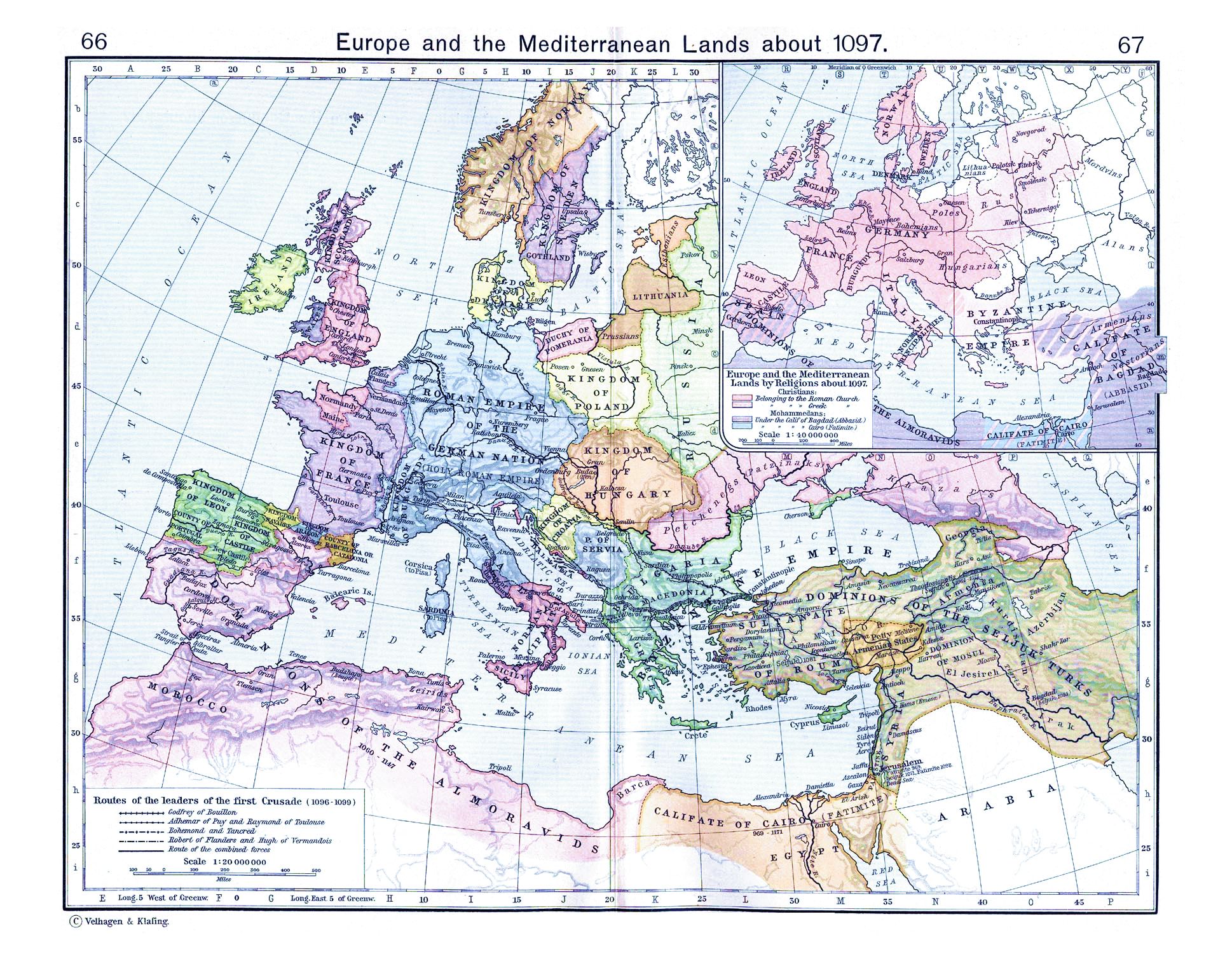
Map of the 1st Crusade

the world to find out about this. It would ruin the divinity of Christ and turn Him into a mere man. What’s wrong with that, you say? Well, if Jesus was fully man but not fully God as well (as the Bible teaches), then the Christian faith as we know it would be annulled. Further, Jesus’s de-deification (only man, not God) would cause the Catholic Church to lose its sway over the ignorant masses of Europe. The “Christian” empire would crumble. And if we’ve learned anything from history, it’s that those who have power will do anything to keep it. Especially killing.

There’s another thing here. According to the non-canonical Gospels of Philip and Mary (don’t open your Bible, you won’t find them in there), Jesus preferred his wife to all His other disciples. Now, in the then Jewish society this would have caused a lot of grief – the favourite was a woman? PERSECUTION! SMEAR CAMPAIGN! And since the rest of the world is no different,
the Catholic Church understood that if the Magdalene story went public, they might not be able to oppress women as they were so fond of doing. In fact, the tables might even turn.

Back to the story. Sometime in 1095 AD, Pope Urbanus II called up the nobles of France and said “Dudes,where’s Jerusalem? Deus vult!” The result was arguably the first act of Christian terrorism, also known as the First Crusade (I said “arguably”. Quiet.). There was bloodshed, battles, sieges, and “Return of the King” special effects. A year later, when it was all over (and not much Jerusalem left to take back), someone had to stick around and make sure that the Christian pilgrims to the Holy Land would be protected from raiding Muslim forces. So, two French knights – Huges de Payens and Godfrey de St Omer – created a band of (originally) nine knights known as the Pauperes Commilitones Christi e Templique Solomonici (huh? what’s that?) or the Knights Templar for short.

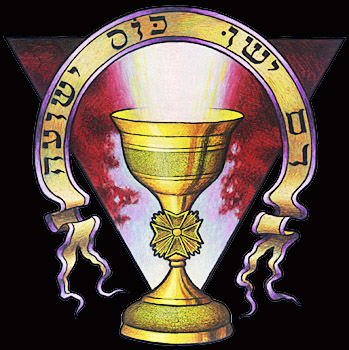
Now what do these guys have to do with our tale? Well, the theory goes that the whole “Serve and protect the pilgrims” thing was just a cover. In reality, the Templars were on a scavenger hunt to find…….. The Holy Grail; the cup that Jesus drank from during the Last Supper. This is where things get really twisted. The Graal was always thought to be a chalice, a word that described a soup bowl at the time. But the theory tells us that the Holy Chalice was nothing else than Mary Magdalene, Jesus’s beloved wife (the chalice symbolising the female womb and the French San Graal [= Holy Grail]really meaning Sang Raal [= Royal Blood]). Evidence? Suddenly the Templars left Jerusalem for reasons unknown, went straight back to Rome, and got filthy rich under the auspices of the Catholic Church. Blackmail? Lottery? Found the Pope’s lost wallet? Who knows… but they did invent the first ATM. Seriously.

Okay, let’s wrap it up. According to the theory, the Templars had some documents proving the Magdalene story, and usedthem to blackmail the Church. But when the Church had had enough of them, it labelled them Satanists (not sure why they hadn’t thought of that earlier) and had them all thrown to the fire. Heck, since the getting was good, they even threw in some Cathars too. And then they went on to hunt down the remaining members of Jesus’s bloodline (remember them?).

But, like in all good stories, some Templars escaped the Catholic persecution, and formed what became known as the Sionis Prioratus, or the Priory of Sion, a super-secret group sworn to protect the Jesus bloodline from the talons of the Catholic Church. What does Da Vinci have to do with this? Well, according to Mr Brown, Leonardo Da Vinci was, in his time, the leader (“Grand Master”) of the Priory, and left us a bunch of Magdalene hints in his paintings. And this is where the “Da Vinci Code” kicks in: The last four members of the Priory are killed, and the race begins to uncover their hidden secret… queue lots of codes, wide-eyes, shock, unbelief and an albino killer Opus Dei monk (who, in the film, looks disturbingly like the evil Emperor from Star Wars).

BACK TO THE RANT

When I read the novel, I honestly couldn’t understand what all the fuss was about. The theory is not original; we’ve been hearing this tripe since the 1st century, only back then it was the Gnostics with Marcion (the Bible-snipper) at the helm and the writing was slightly better. Don’t get me wrong – the whole Knights Templar, Sionis Prioratus, (huh? what’s that?), Magdalene and Merovingian legend has some historical value, but unfortunately for Mr Brown, it doesn’t stand the test of historical research, and I hope he knows it. Actually, I doubt he knows it, because at the beginning of his novel he claims that all historical notes are accurate, and some of them are in-your-face not.

To be continued…

The Microscope recommends. Like anyone cares.

In other news (other than the angry Veg-mob), it’s been a busy week as always, but not only work-wise. Surprisingly, there are a few morsels of “real” life to talk about.

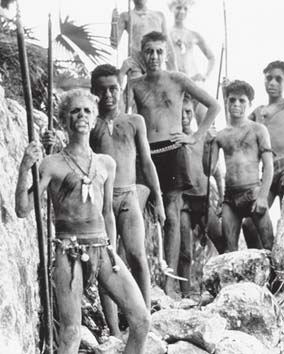
Last night, in a rare bout of insomnia, I finished William Golding’s Nobel-winning book “Lord of the flies”. It’s a strange tale of a bunch of British kids who crash on a Pacific island and go gradually crazy – actually, “atavistic” (huh? what’s that?) is a more appropriate term.

Essentially, the book is a study of social structure and human nature. Golding’s view was that we derive our morals and values from the presence of order and civilisation around us; in the absence of these, we will begin slaughtering pigs, bashing people’s heads in and dancing naked in the moonlight. I’m not sure I fully agree with this notion – that circumstances dictate the level of our morality – but I think the way he captures the beast within – smeared on the canvas of childish innocence – is superb. In short, he turns the island into a micrography of the world, and unleashes the different forces of human society – democracy, anarchy, morality, immorality – in a dazzling way. Not to mention that his descriptions – though dangerously teetering on the Tolkien “please-no-more-leaves-and-trees” edge – are captivating, simply because they are first hand. A vicious novel that might even disturb us today, 52 years later.

And that’s not all. Get some coffee. About a week ago, I also finished Robert Baer’s “See no Evil”, an account of an ex-CIA agent on how beautifully the CIA has messed up its act in order to serve wallets. Nothing we didn’t already know then, but it was shocking to find out the specifics. I’d recommend it to anyone who remotely wonders what all those “the CIA trained terrorists” or “the CIA is involved in the Middle-East” accusations actually mean. And even if you couldn’t care less (like the CIA), it’s still a tight, powerful and realistic (well, duh) spy thriller. It’s a wonder how huge organisations like that can get away with willful incompetence and neglect, two sins that unfortunately culminated in the sad events of 9/11.

And speaking of the fall of giants, I’ll close this little review spree by mentioning an exceptional documentary I watched on Saturday: “Enron: The smartest guys in the room”. If the name “Enron” means anything to you, it’s definitely worth watching, if only to understand something about the mind and psyche of the people behind the biggest scam in human history, including Scientology. In one word, unbelievable – and that’s pretty much how they pulled it off. Agitprop? Nope – just a view to how far corporate realpolitik (aka “greed”) can go with some good will and blind eyes.

Okay. Enough hippy reviews. If you read so far, thank you. But what have we learned? I’ll leave the answer to some friends:

That which has been is what will be, That which is done is what will be done, And there is nothing new under the sun. – Ecclesiastes 1:9

But…

…there is no difference; for all have sinned and fall short of the glory of God, being justified freely by His grace through the redemption that is in Christ Jesus. – Romans 3:22b-24

The terror of terror

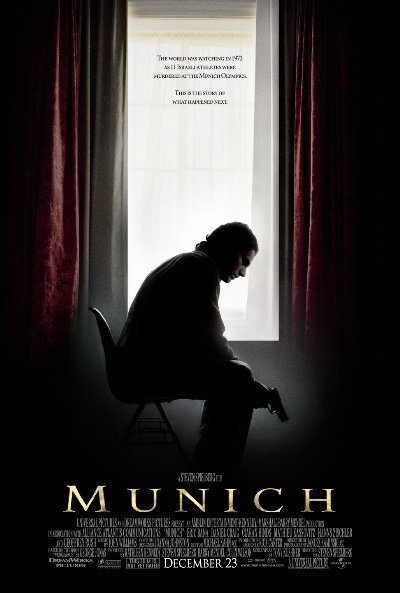
I don’t know if you’ve heard of a film that is out these days, “Munich” by Steven Spielberg. It’s the story of a young Mossad agent (alias “Avner”) who, with another four agents, undertakes a revenge mission to assassinate the terrorists who were behind the 1972 Munich Olympics massacre. I haven’t seen the film yet but I’m looking forward to it, and I’ve already started going through the original book by journalist George Jonas.

What fascinates me is not so much the details of intelligence work (of which the book is full) or the personal challenges that young “Avner” encounters. Suffice to say that the people involved in this type of work are very different from the rest of us and their motivation is often a very hard nut to crack. However, what I am interested in are – as the story intends – the strange dynamics of political terror.

There is no doubt that our era will be branded “The Age of Terrorism” by future historians. Is there anyone out there that can keep track of the daily car-bombs going off in Iraq and Palestine? Today alone the UK mourned its 100th dead soldier in Iraq. The recent election of Hamas in Palestine caused ripples of concern in the EU who had to re-think its funding to the country. And in the background, people are being kidnapped, people are blowing up undergrounds, buses, buildings and themselves in the name of whatever ideology/religion they follow.

It’s certainly not new. The idea of using terror to impose and/or propagate ideas is pretty old and becomes ancient if the definition is broad enough. Those familiar with Guy Fawkes and his friends will trace it back to 1605. I personally tend to view the Crusades as a form of organised terrorism myself. And the debatable list goes on and on.

The issue that Avner’s story raises is a little different though. It’s the question of how far can someone go to counter terrorism without resorting to the same tactics terrorists use. And especially to anyone who’s ever had a little combat and tactics training, the question is intensely pertinent, simply because they have a taste of how thin the line between offense and defense is.

(In the end, dead people all look the same).

No, I’m not going to offer solutions to the Middleastern problem – there are far more qualified people out there who are trying to. But it is sad to watch this global perpetuation of unecessary violence, especially when it affects the lives of children, as happened in Beslan in 2004. But I suppose that that is the purpose of terrorism: to instill fear and threaten the innocent in order to affect the higher-ups. And as a former soldier, I can only regard such use of force as cheap, cowardly, incompetent, and contemptible.

Stat rosa pristina nomine…

Yesterday I watched The name of the Rose. I’d forgotten what an amazing story it is, both in book and film.

If you haven’t read it, you should. It’s a detailed, intriguing thriller set in 1327, about a series of gruesome murders in a Benedictine monastery, and the Sherlock Holmes-esque efforts of an English Franciscan monk to solve the case before the Inquisition takes over and starts burning random people.

The historical detail is dazzling, as would be expected from a scholar like Umberto Eco (the author, by the way), and I doubt there are any modern writers who could match it for plot, character development, intricacy, storyline, description, setting and suspense. And that’s including JK “I made millions with bedtime stories” Rowling.

But what really hit me this time was the concerns that the theologians of the time had. Even to someone who knows nothing about Church history, this period will appear pretty much as it was: Insane.

It was a time when over three quarters of Europe lived in squalid poverty, while many who professed to be men of God sat in golden thrones, growing fat on the taxes of the ignorant masses who hoped to gain access into heaven by donating what little they had to the Church. It was a time when the Christian faith had become so infiltrated by traditions and politics and bad blood, that it resembled nothing of what it should be. And every now and again, someone would speak openly against the injustice of the Church and the rich and before you knew it, you had massive uprisings, revolutions, the poor slaughtering the rich and the rich slaughtering the poor.

In fact, it was a mess. Crime, disease, depravity, corruption and those who should be helping just made things worse. Lack of education was punished as a crime; higher education was punished as heresy. Mental disorders were treated as demonic posession; sickness as witchcraft; poverty as God’s judgement.

(Of course, these things don’t happen anymore. The world is so much better now.)

And in the midst of all this raged fierce arguments of minute and obscure theological issues that seem all the more idiotic in hindsight. Not that they were all insiginificant. Not that there were no examples to follow. Not that we shouldn’t be thankful for the Wise of the time who battled to keep what they could from deteriorating into chaos. But for the biggest part, I believe that what called itself the Church back then was nowhere near worthy of the title, both in terms of theology and of practice.

Ok ok, stop yawning. I just thought I’d up the culture factor a little. Not only because I’m so fascinated by that particular era, but because it is a sad fact that the blindness and stupidity that plagued the world back then is still here today.

A hippy scientist I worked with asked me once: “[Dude] Why do you waste your time with the things of the past?” And I said, “Because they teach me the things of today.”

… nomina nuda tenemus.