(Scroll down or click here for Part 1)
…and we’re back.
There’s so much wrong with The Code, that I can’t really fit it all here (nor do I think the book’s worth the attention). For example, outrageous nonsense like the origins of Christianity in Mithraism or the first-time deification of Jesus at the Council of Nicaea (325 AD). Um, did anyone else pay attention at school history? Mr Mithra’s career involved bull-slaying and planetary allusions, but there isn’t a single document out there that talks about his death and resurrection in three days, or that refers to him as the Son of God. They did, however, give him the title Sol Invictus (unconquered Sun) sometime in the 3rd century, and he had to share it with a couple of other Roman gods (El Gabal and Sol, if I’m not mistaken). I’d really like to see where Mr Brown got his reference from. Or pulled it out of.
As for the Council of Nicaea, any shool kid can answer that: Open a New Testament, and you can count a number of instances where Jesus is referred to as God (just as an example, look at John 20:28 and 31). Now, the last time I checked, the New Testament texts were written way before the Nicaean Council. A couple of hundred years before, to be exact. So when Mr Brown whispers to us in his oh-so-conspiratorial tones that “before 325 AD Jesus was regarded by his followers as a mere man”, I would ask him if he got that from the same printed drivel where he copied the rest of his absurdities too. Ever heard of the “Holy Blood, Holy Grail” (1981)? Of course you have. Just like you heard about “The dolorous passion of our Lord Jesus Christ” when “The Passion of the Christ” hit the box office. There’s a reason why these works were so obscure before pop culture made everyone a scholar…
And the list goes on: Simple facts like the Dead Sea scrolls discovery (1945), which were written in the mid-to-late 2nd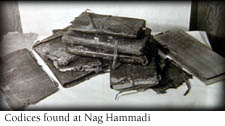 century AD (some hundred years after the latest Gospel). Illogical accusations that Jesus’s disciples were misogynists who tried to conceal the marriage of their Teacher to Mary Magdalene as a scandal, when they didn’t seem too concerned to hide the fact that He had been crucified like a despicable criminal. Wasn’t that scandalous? Or that they distorted the truth about Jesus just so they can gain power, when all of them ended up suffering martyrdom for their faith – this, I think, alone, would bin the gist of the Code’s theories.
And there is so much more we could talk about: The myth of Jesus being married, the validity of the Apocrypha Gospels the novel relies on, the Hieros Gamos (ancient ceremonial voyeuristic orgies), the Sacred Feminine notion, Opus Dei, how the New Testament was really put together, the alleged “demonisation” of Mary Magdalene (started around 591 AD, and not from the apostle Peter) and much much more to make Da Vinci himself roll in his grave… but there are excellent rescources out there from far more qualified people than me to analyse all this.
It’s not like the writing is any better: Unsubstantial, unrealistic characters spit out ultra-cheesy dialogue – and those are the main characters. The plot is laughable at the least (dusty middle-aged scholar evades professional killers and the French AND British police with the help of a conveniently expert/pretty cryptographer) and the language outlandish. I mean, “[his] laugh now an eerie chortle“? Hello? HELLO? Did an editor go through this pulp before they inflicted it on mankind? Every time some “new revelation” comes through, someone is stumbling backwards, eyes wide and hand on mouth. EVERY. SINGLE. TIME. Look at Sophie Neveu for example. We know that introducing a second “main” character opens the way for dialogue instead of thought, but this girl is simply being abused. The only reason we learn almost anything in the Da Vinci Code is because she yelps “I don’t understand” every three pages. At least she’s pretty. But I dare you to read the ending with a straight face. I DARE you. It’ll make you scream at the thought that Dan Brown actually taughtcreative writing once.
But what really kills the book and the film is their inherent smugness of “I know something you don’t”. Just read any classroom flashback Robert Langdon gets. Usually teaching a class of conveniently conservative imbeciles, he relishes every time he destroys their already tenuous “beliefs” by showing them that people like to use the same symbols across the world. Wow. What a shock. Prof Langdon smiles with glee as he fires his obscure (and not always correct) knowledge of symbology at his baffled students. Look what the pagans used and – oh! look at what the Catholics use! Look at this Star of David – ah! It’s a combined pagan male/female symbol! The Catholics worship a woman (Mary) and her Son? Ah! So did a thousand pagan religions from Greece to Africa to India. And so forth. Yoo stoopid littul piiipul. How wonderful it is that Robert Langdon has fallen from heaven to open our blinded eyes. But then again, what they call Higher Criticism has never been without its Higher Brow. (By the way, can someone tell Mr Brown that NOT ALL CHRISTIANS ARE CATHOLICS? Thank you.)
In the end, I just don’t get it. All these literary agents write to me saying that their client list is full and the publishing world is soooo competitive, and I just have to wonder how does writing so ridiculous, plotting so ludicrous and research so absurdly sloppy ever makes it in book form. Virtually every page/scene of The Da Vinci Code causes you to wonder how and why a work of such low thematic and literary quality sold in the millions. But I guess there’s really no such thing as bad publicity, controversy sells and most people just don’t care enough to do their homework. And that, my friends, is the only mystery of The Da Vinci Code that we can’t solve.
And there are also many other things that Jesus did, which if they were written one by one, I suppose that even the world itself could not contain the books that would be written. Amen. – John 21:25
“Beware of false prophets, who come to you in sheep’s clothing, but inwardly they are ravenous wolves. You will know them by their fruits. Do men gather grapes from thornbushes or figs from thistles?” – Mat. 7:15-16
But there are some who trouble you and want to pervert the gospel of Christ. But even if we, or an angel from heaven, preach any other gospel to you than what we have preached to you, let him be accursed. As we have said before, so now I say again, if anyone preaches any other gospel to you than what you have received, let him be accursed. – Gal. 1:7-9
O Timothy! Guard what was committed to your trust, avoiding the profane and idle babblings and contradictions of what is falsely called Knowledge [ = Gnosis] — by professing it some have strayed concerning the faith. – 1 Tim. 6:19-21
For I testify to everyone who hears the words of the prophecy of this book: If anyone adds to these things, God will add to him the plagues that are written in this book; and if anyone takes away from the words of the book of this prophecy, God shall take away his part from the Book of Life, from the holy city, and from the things which are written in this book. – Rev. 22:18-19




 The Upturned Microscope