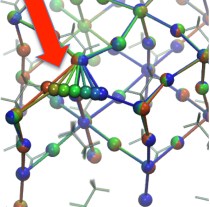
 EPFL scientists have discovered what lies at the heart of one of the biggest obstacles in accurately determining the efficiency of perovskite solar cells —Read more
Author Archives: spesaeterna
A better model for Parkinson’s
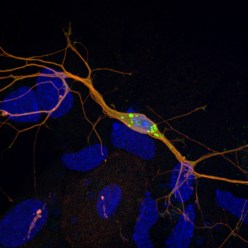 Scientists at EPFL solve a longstanding problem with modeling Parkinson’s disease in animals. Using newfound insights, they improve both cell and animal models for the disease, which can propel research and drug development– Read more
Perovskite-nanotubes take light sensitivity to new heights
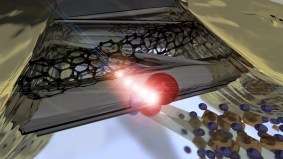 EPFL scientists build the most sensitive carbon nanotube-based photodetector to date. The material is sensitized with CN3NH3PbI3 perovskite nanowires, which propel its responsivity by almost seven orders of magnitude Read more
A tiny ring that produces light pulses
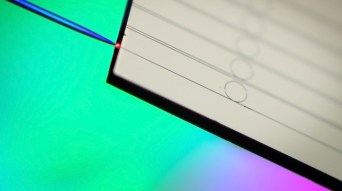 Researchers led by EPFL have made a tiny, ring-shaped device that can generate a pulsed laser signal. Their work could be used in telecommunications applications and in chemical analysis– Read more
Cheaper solar cells with 20.2% efficiency
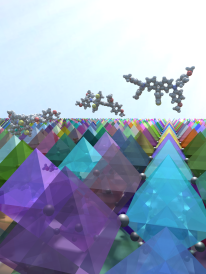
EPFL scientists have developed a solar-panel material that can cut down on photovoltaic costs while achieving competitive power-conversion efficiency of 20.2%. Read more
 The Upturned Microscope